Walk into a busy pharmacy or clinic anywhere in Kenya today and you’ll notice something changing.
In one facility, staff are still flipping through exercise books, balancing stock with handwritten notes, and trying to reconcile M-Pesa payments at the end of the day.
In another, everything happens from a phone, tablet, or computer. Payments confirm instantly. Expiring medicines are flagged automatically. Stock levels update in real time. Reports are generated in seconds.
That difference is becoming impossible to ignore.
Across Kenya, pharmacies, clinics, dispensaries, hospitals, and veterinary practices are rapidly moving away from paper-based operations and adopting cloud-based systems — not because it’s trendy, but because the old way is becoming too expensive, too risky, and too difficult to manage.
Here’s why the shift is happening.
1. Manual Processes Quietly Drain Revenue
Most losses in a health facility don’t happen dramatically. They happen little by little.
A medicine expires unnoticed on the shelf.
A supplier invoice disappears.
A stock count doesn’t match what was sold.
An M-Pesa payment is received but never recorded properly.
Over time, these small issues add up to major financial losses.
The problem with paper records and spreadsheets is that they don’t give you visibility in real time. By the time you discover a discrepancy, the money — or stock — is already gone.
Cloud-based systems change that completely.
Platforms like DawaTrack track every sale, stock movement, batch number, and payment automatically in one centralized system. Instead of spending hours trying to figure out what happened, owners can see exactly what’s happening as it happens.
2. M-Pesa Integration Has Become Essential
In Kenya, customers expect to pay with M-Pesa. It’s no longer an added convenience — it’s part of everyday business.
But many facilities still handle payments manually:
-
Customer sends money
-
Staff checks SMS
-
Sale is written down manually
-
End-of-day reconciliation becomes stressful
That process creates room for delays, errors, and disputes.
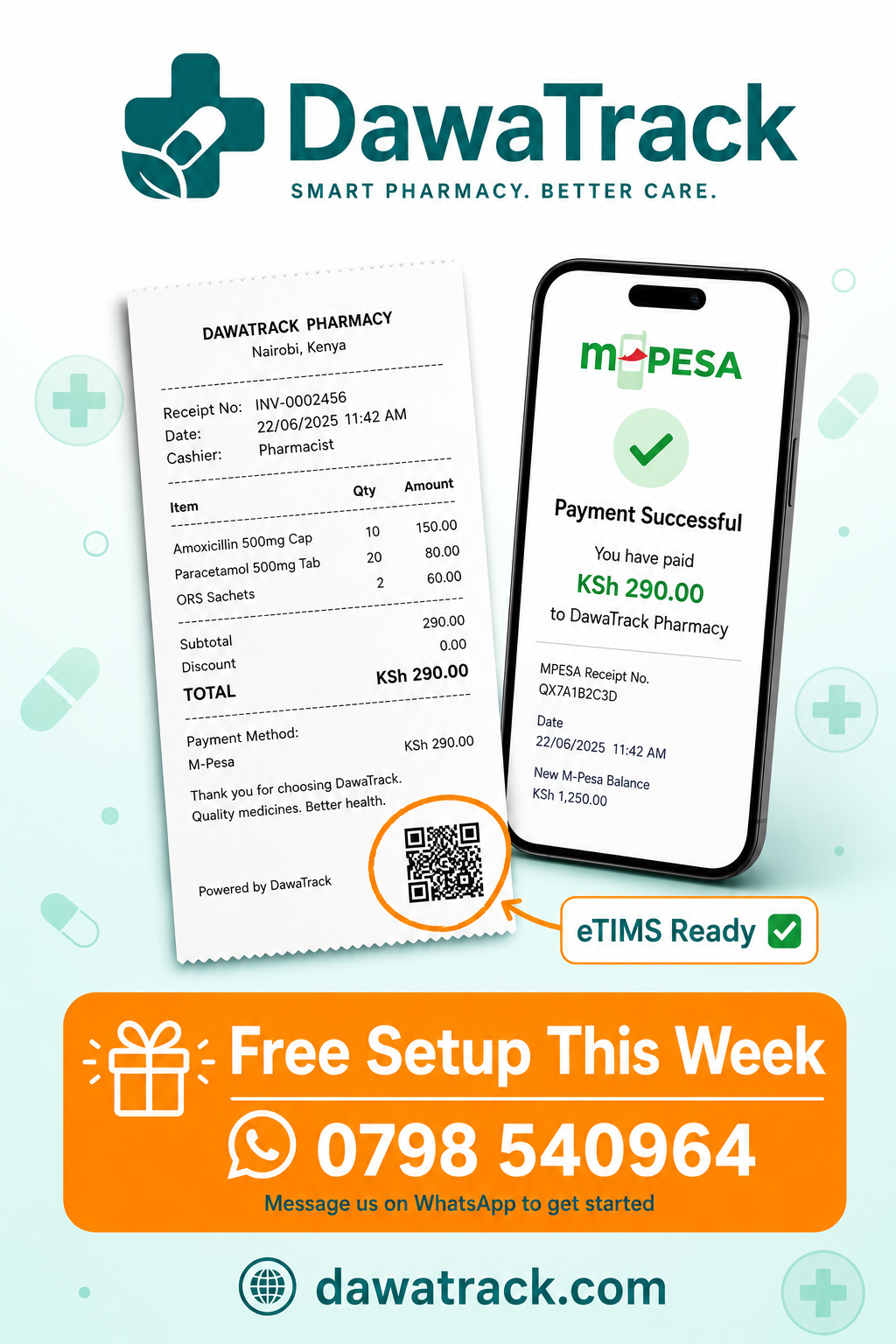
Modern healthcare management systems now integrate directly with M-Pesa using STK Push technology. The payment request goes straight to the customer’s phone, payment confirmation is instant, and the transaction is recorded automatically in the system.
No chasing messages.
No manual reconciliation.
No uncertainty.
For busy pharmacies processing dozens or hundreds of transactions daily, this alone can save hours every week.
3. Expiry Management Is Too Important to Handle Manually
Medicine expiry isn’t just an operational issue — it’s a patient safety issue.
Dispensing expired medication can seriously damage patient trust and may also lead to regulatory consequences from the Pharmacy and Poisons Board (PPB).
The challenge is that tracking expiry dates manually becomes almost impossible as stock grows. One facility may handle hundreds of products and multiple batches at the same time.
Cloud-based systems automate this process using FEFO (First Expiry, First Out).
That means:
-
Staff are guided to dispense the correct batch first
-
Near-expiry products are flagged automatically
-
Expiry reports are generated instantly
-
Facilities stay better prepared for inspections
Instead of relying on memory or manual checks, the system helps enforce safer dispensing practices consistently.
4. Growth Becomes Difficult Without Proper Systems
Many pharmacy owners in Kenya start with one branch and eventually expand.
That’s when operational complexity increases fast.
Questions start coming up every day:
-
Which branch is low on stock?
-
Which location is performing best?
-
Are all staff following the same processes?
-
Is stock disappearing at one branch?
-
Are reports even accurate?
Managing multiple branches through WhatsApp updates, Excel sheets, and phone calls quickly becomes overwhelming.
A cloud platform allows owners to manage every branch from one dashboard — whether they are in Nairobi, Eldoret, Kisumu, or Mombasa.
You can monitor sales, transfer stock between branches, manage staff permissions, and view performance across all locations in real time.
That level of visibility simply isn’t possible with paper systems.
5. Data Helps You Make Better Business Decisions
Most facilities make purchasing decisions based on instinct.
"Paracetamol usually moves fast — let’s order more."
But instinct alone can lead to overstocking slow-moving items or running out of fast movers at the wrong time.
With proper analytics, facilities can finally make data-driven decisions.
You can quickly see:
-
Your best-selling products
-
Slow-moving stock before it expires
-
Revenue trends over time
-
Which payment methods customers use most
-
Which branches are performing best
That information helps facilities reduce waste, improve cash flow, and plan growth more confidently.
6. Healthcare Compliance Is Becoming More Digital
Kenya’s healthcare sector is steadily moving toward stronger digital oversight and record keeping.
Facilities that already maintain organized digital records — including dispensing histories, batch tracking, prescriptions, and financial reports — will adapt much more easily as compliance requirements continue evolving.
Digitization is no longer something only large hospitals are doing.
Smaller pharmacies, clinics, and dispensaries are adopting these systems because they simplify operations today while preparing facilities for the future.
The Bigger Picture
Moving to the cloud isn’t really about technology.
It’s about reducing losses.
Serving patients better.
Protecting your business.
Saving time.
Creating accountability.
And building a facility that can grow sustainably.
The healthcare facilities embracing digital systems early are already operating faster, cleaner, and more efficiently than those still depending entirely on paper.
And the transition is becoming more affordable than ever.
Built for Kenyan Health Facilities
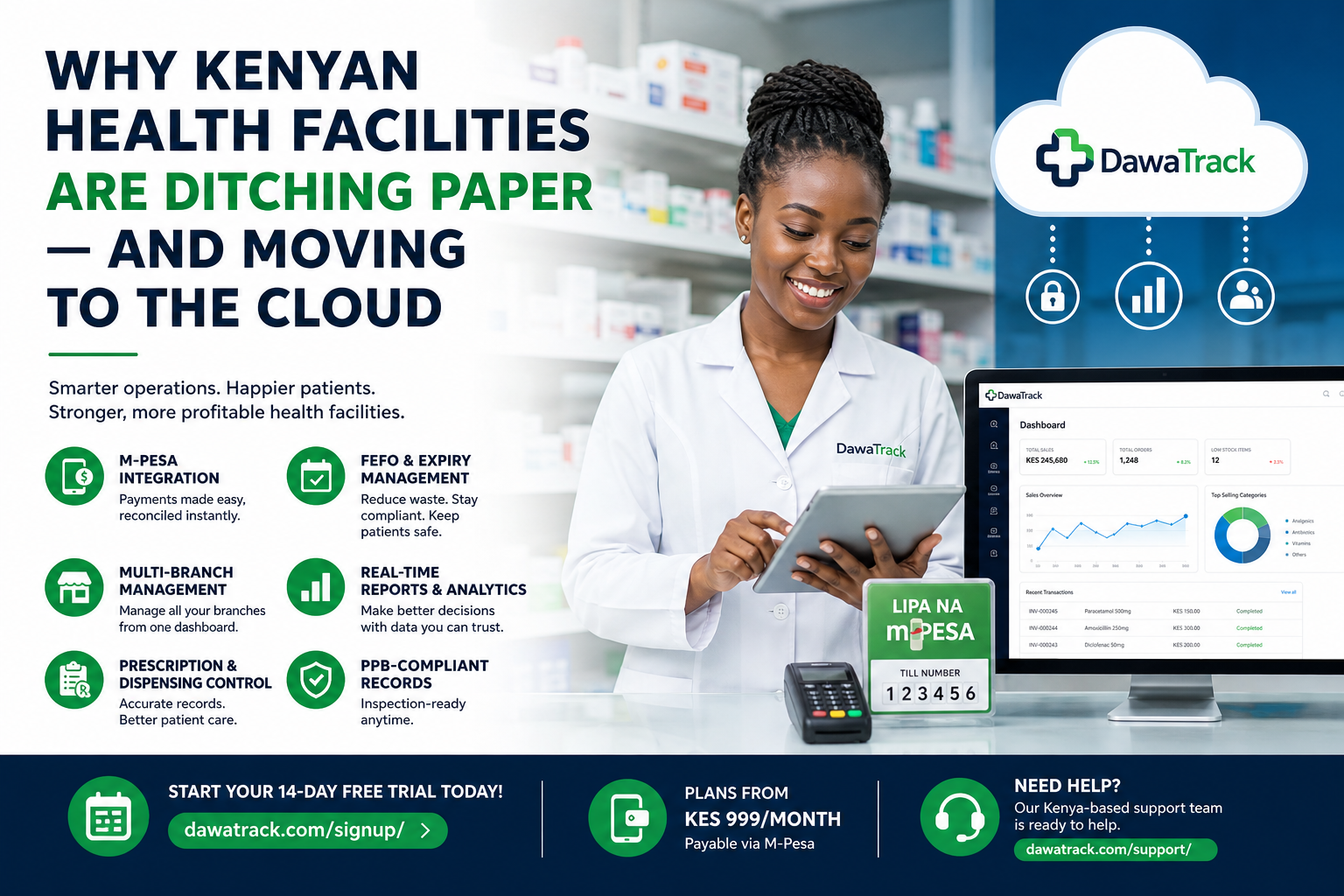
DawaTrack is designed specifically for Kenyan pharmacies, clinics, hospitals, dispensaries, and veterinary practices.
The platform includes:
-
Native M-Pesa integration
-
FEFO batch and expiry tracking
-
Prescription management
-
Multi-branch support
-
Real-time reporting
-
Role-based staff access
-
PPB-compliance-ready records
Plans start from KES 999/month with no setup fee and a 14-day free trial.
Start here:
Start Free Trial
Need help or have questions about switching from paper?
DawaTrack Support